HYDRATION

Hydration is the ingestion of water, in the amounts needed, to replenish the water in the body. Water in the body affects almost everything, from skin health and body weight to neurological and gastrointestinal functioning.

Proper hydration can also help prevent the development of chronic disease.

HOW I USE HYDRATION

As a woman with Multiple Sclerosis (MS),I use Hydration to help manage my MS. When I discovered that inflammation causes MS relapses, with relapses being the worsening of current or creation of new MS symptoms, I incorporated Hydration into my beneficial diet to do the following:

  • Maintain my health and help prevent the development of chronic disease, which is a major source of inflammation.

And managing inflammation helps manage my MS.

I ingest roughly a gallon of water per day to maintain my health.

I also suffer from bladder dysfunction which makes me susceptible to urinary tract infections (utis), another source of inflammation. Keeping hydrated helps minimize the occurrence of utis.

When I turned 50 yrs old, and entered menopause, I developed dry eyes. And I discovered that keeping hydrated helps manage my dry eyes, as well.

CAUTION

Ingesting large amounts of anything can be harmful, even water, so I always consume in moderation.

-Jen, aka. Power Chair Dorothy


REFERENCES

Allen, M. D., Springer, D. A., Burg, M. B., Boehm, M., & Dmitrieva, N. I. (2019). Suboptimal hydration remodels metabolism, promotes degenerative diseases, and shortens lifeJCI insight4(17), e130949.

Farrell, D. J., & Bower, L. (2003). Fatal water intoxicationJournal of clinical pathology56(10), 803–804.

Liska, D., Mah, E., Brisbois, T., Barrios, P. L., Baker, L. B., & Spriet, L. L. (2019). Narrative Review of Hydration and Selected Health Outcomes in the General PopulationNutrients11(1), 70.

Perrier, E. T., Armstrong, L. E., Bottin, J. H., Clark, W. F., Dolci, A., Guelinckx, I., Iroz, A., Kavouras, S. A., Lang, F., Lieberman, H. R., Melander, O., Morin, C., Seksek, I., Stookey, J. D., Tack, I., Vanhaecke, T., Vecchio, M., & Péronnet, F. (2021). Hydration for health hypothesis: a narrative review of supporting evidenceEuropean journal of nutrition60(3), 1167–1180.

Popkin, B. M., D’Anci, K. E., & Rosenberg, I. H. (2010). Water, hydration, and healthNutrition reviews68(8), 439–458.

Science Direct: Hydration


Not in Kansas Anymore (www.notinksanymore.com) is a site/blog authored and managed by Jen, aka. Power Chair Dorothy (pwrchr-dorothy). This site/blog is intended to provide educational and research information, and to share the author’s journey.

The author of this site/blog is not a medical physician and this site/blog does not provide medical advice. This site/blog contains information that should not be used in place of a visit, call, consultation or the advice of your physician or other qualified healthcare provider. If you choose to apply or implement any information posted at this site/blog, you do so at your own risk.

THE WHELDON CAP

Micrograph of Chlamydia pneumoniae in epithelial cell in acute bronchitis by Eutensist, Public domain, via Wikimedia Commons. 1 – infected epitheliocyte, 2 – uninfected epitheliocytes, 3 – chlamydial inclusion bodies in cell, 4 – cell nuclei.

The Wheldon CAP is a combined antibiotic protocol (CAP) designed to kill Chlamydia pneumoniae (Cpn), a very infectious bacteria thought by some medical professionals to be the cause behind many autoimmune disorders, like Multiple Sclerosis (MS).

The research into Cpn being a causative agent for MS originated with Doctors Stratton and Sriram at Vanderbilt University in Tennessee. They determined that to eradicate Cpn, a combined antibiotic protocol is required. Unfortunately, the first CAPs created by Stratton and Sriram were not easily tolerated by patients. In late 2003, Dr. David Wheldon joined the fight against Cpn while researching treatments for his wife Sarah, who had secondary progressive MS. Proclaiming he was successful in stopping her progression and reversing most of her neurological issues, he presented to the world the Wheldon CAP.

The Wheldon CAP focused on the elimination of Cpn, with the strategic use of three antibiotics. The combination was purported to eliminate the risk of developing antibiotic-resistant bacteria. Unfortunately, when the Cpn die they release toxins which make patients experience flu-like symptoms called ‘die off’. Patients were advised to do the CAP continuously, until there was no more die off. And due to the bacteria’s tenacious nature, it was assumed it would take years to completely rid a patient of Cpn. The antibiotics also kill off the good bacteria in the gut (ie. Probiotics), which negatively affects the immune system.

The Wheldon CAP was never approved by the AMA for the treatment of MS or any other autoimmune disorder. People who tried the Wheldon CAP, did so on their own, at their own risk, most without a doctor’s supervision. The only help and support was found at an online support group dedicated to the Wheldon CAP.

MY EXPERIENCE

Discovering the Wheldon CAP in 2011, I reviewed the research, joined the support group, and committed to the CAP. I did the CAP for several years. Even though I never experienced anything that confirmed that Cpn is the cause behind MS, I do believe the CAP helped me manage my MS. Before I learned about the CAP, I discovered that inflammation causes MS relapses, with relapses being the worsening of current or creation of new MS symptoms. The CAP’s antibiotics protected me from infections, and since infections are inflammation triggers, the antibiotics protected me from MS relapses too.

Unfortunately, the Wheldon CAP also took its toll on me, from the cost of the antibiotics, and recommended supplements, to the debilitating die-off. The continuous antibiotics also made my Candidiasis, another inflammation trigger, much harder to manage. I took a lot of flak from my doctors when they found out I was taking continuous antibiotics. And yet, I never became patient zero for an antibiotic-resistant ‘super bug’, because of the combined antibiotics. I don’t regret doing the Wheldon CAP. I learned a lot, but I’d never advise anyone to do it now. I have found much easier ways to manage MS, by simply managing inflammation.

Being a part of the online support group meant a lot to me. At the time, it was one of the few sources of support I could count on. It was a rebel movement that spanned the globe and I’m proud to have been a part of it. I ended up leaving the group when my life became increasingly chaotic and I just couldn’t juggle it all. I regret that. With Dr. Wheldon’s passing in 2021 and the online support group no longer around, I think it’s time to put the Wheldon CAP to bed.

-Jen, aka. Power Chair Dorothy

References

Buljevac, D., Verkooyen, R. P., Jacobs, B. C., Hop, W., van der Zwaan, L. A., van Doorn, P. A., & Hintzen, R. Q. (2003). Chlamydia pneumoniae and the risk for exacerbation in multiple sclerosis patients. Annals of Neurology, 54(6), 828-31.

Grayston, J. T. (2000). Background and Current Knowledge of Chlamydia pneumoniae and Atherosclerosis. The Journal of Infectious Diseases, 181(3), S402–S410.

Munger, K. L., Peeling, R. W., Hernán, M. A., Chasan-Taber, L., Olek, M. J., Hankinson, S. E., Hunter, D., & Ascherio, A. (2003). Infection with Chlamydia pneumoniae and risk of multiple sclerosis. Epidemiology, 14(2), 141-147.

Sriram, S., Mitchell, W., & Stratton, C. W. (1998). Multiple Sclerosis Associated with Chlamydia pneumoniae Infection of the CNS. Neurology, 50(2), 571-572.

Sriram, S., Stratton, C. W., Yao, S., Tharp, A., Ding, L., Bannan, J. D., & Mitchell, W. M. (1999). Chlamydia pneumoniae infection of the central nervous system in multiple sclerosis. Annals of Neurology, 46(1), 6-14.

Sriram, S.,  Ljunggren-Rose, A., Yao, S. Y., & Whetsell, W. O. (2005). Detection of Chlamydial Bodies and Antigens in the Central Nervous System of Patients with Multiple Sclerosis. The Journal of Infectious Diseases, 192(7), 1219–1228.

Stratton C. W. (2016) . A Review of Multiple Sclerosis as an Infectious Syndrome. Journal of  Neurology & Neurophysiology, 7.

Yamaguchi, H., Friedman, H., Yamamoto, M., Yasuda, K., & Yamamoto, Y. (2003). Chlamydia pneumoniae resists antibiotics in lymphocytes. Antimicrobial agents and chemotherapy47(6), 1972–1975.


Not in Kansas Anymore (www.notinksanymore.com) is a site/blog authored and managed by Jen, aka. Power Chair Dorothy (pwrchr-dorothy). This site/blog is intended to provide educational and research information, and to share the author’s journey.

The author of this site/blog is not a medical physician and this site/blog does not provide medical advice. This site/blog contains information that should not be used in place of a visit, call, consultation or the advice of your physician or other qualified healthcare provider. If you choose to apply or implement any information posted at this site/blog, you do so at your own risk.

THE SOUP SOLUTION

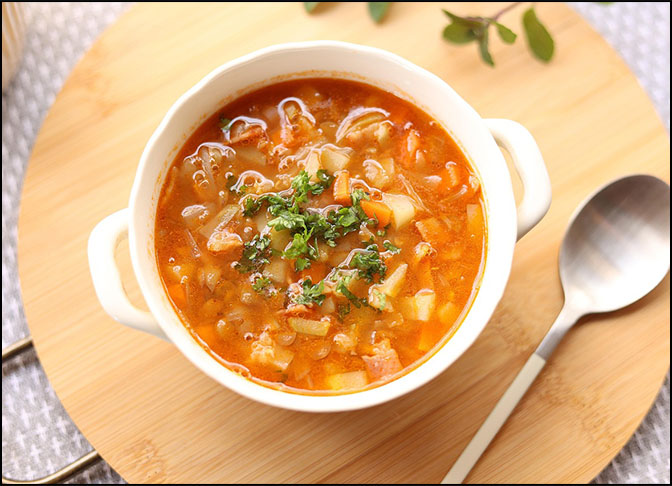
I love a warm, comforting bowl of soup. Unfortunately, most canned and boxed soups contain ingredients that don’t exactly agree with me (ie. food sensitivities). The same with soups from most restaurants. Of course, the cost of buying healthier soups that contain less problematic ingredients can be prohibitive. And let’s not forget the cost of eating out and take out. The obvious solution, of course, is to simply make my own soup. Being a woman who knows how to cook, making my own soup should be easy, but as a woman with disabilities, my ability to physically cook is limited. Therefore, to create my own soup at home, I had to problem solve.

After much trial and error, I finally found success working at a smaller scale and relying on helpful cooking shortcuts, like my restorative broth mixes. I discovered that 4-cup, handled bowls work best for me. They are easier to manage, physically, than a large soup pot and can be easily put in the microwave. To eliminate the need for the cleaning and cutting of fresh ingredients, I experimented with dried, powdered, frozen, and even canned/jarred ingredients. By the end, I managed to develop several tasty recipes for single serving soups.

I also love Thai Curries and managed to create single serving versions of them as well. Even though Thai curries are technically not soups, I tend to treat them like soups and therefore have grouped those recipes in with my single serving soups.

SINGLE SERVING SOUPS

These soups also contain anti-inflammatory foods. Those anti-inflammatory foods being Carrots, Tomatoes, Artichoke Hearts, Pumpkin, Peanuts, and the ingredients in the Broth Mixes.

As a woman with Multiple Sclerosis (MS),I use these soups to help manage my MS. When I discovered that inflammation causes MS relapses, with relapses being the worsening of current or creation of new MS symptoms, I incorporated these soups into my beneficial diet to help manage inflammation. And managing inflammation helps manage my MS.

I share these recipes, in the hopes of helping others. Enjoy.

-Jen, aka. Power Chair Dorothy


Not in Kansas Anymore (www.notinksanymore.com) is a site/blog authored and managed by Jen, aka. Power Chair Dorothy (pwrchr-dorothy). This site/blog is intended to provide educational and research information, and to share the author’s journey.

The author of this site/blog is not a medical physician and this site/blog does not provide medical advice. This site/blog contains information that should not be used in place of a visit, call, consultation or the advice of your physician or other qualified healthcare provider. If you choose to apply or implement any information posted at this site/blog, you do so at your own risk.

LOW DOSE NALTREXONE

Image created using Photograph by Jill Wellington from Pixabay

Low Dose Naltrexone (LDN) is derived from Naltrexone, a drug used to treat opioid addicts. In the 1980s, a doctor from New York, Dr. Bihari, discovered that at a low dose the drug has an interesting effect on the immune system. Taken between 9:00 p.m. and 3:00 a.m., LDN causes an increase in endorphin production, which helps strengthen and normalize the immune system.

Strengthening and normalizing the immune system has a couple benefits. Besides making it easier to fight off infection and disease, it also lessens the occurrence of chronic inflammation, which is linked to autoimmune disorders like Multiple Sclerosis. Today LDN has been found to benefit many conditions.

HOW I USE LDN

As a woman with Multiple Sclerosis (MS),I use LDN to help manage my MS. When I discovered that inflammation causes MS relapses, with relapses being the worsening of current or creation of new MS symptoms, I incorporated LDN into my life to do the following:

  • Manage chronic inflammation.
  • Fight/prevent infections, which are major sources of inflammation.

And managing inflammation helps manage my MS.

In 2010, I incorporated LDN into my daily routine and I’m so glad I did. It helped me manage my chronic inflammation and significantly lessen my MS symptoms, especially the fatigue I experienced. I’ve been taking it ever since.

In early 2024, I lost my LDN provider. I went a couple months without LDN and the resulting fatigue was crippling. Luckily, I found a new provider and started taking it again. The fatigue went away and I was able to function again.

After several months with my new provider, I was asked if I would be interested in trying a higher dose. I decided to try it and after a couple months started experiencing increased mental clarity and a slow, but steady, weight loss.

RESOURCES

I rely on the LDN Research Trust and LDN Science for information on LDN and the latest research. They also maintain lists of doctors who prescribe LDN.

CAUTION

Since LDN does not get along well with some medications and medical conditions, I’m careful to check for contraindications.

-Jen, aka. Power Chair Dorothy


REFERENCES

Bihari, B. (2013). Bernard Bihari, MD: Low-dose Naltrexone for Normalizing Immune System FunctionAlternative Therapies, 19(2), 56-65.

Kulak-Bejda, A., Bejda, G., & Waszkiewicz, N. (2020). Safety and efficacy of naltrexone for weight loss in adult patients – a systematic reviewArchives of medical science : AMS17(4), 940–953.

Ludwig, M. D., Turel, A. P., Zagon, I. S., & McLaughlin, P. J. (2016). Long-term Treatment with Low Dose Naltrexone Maintains Stable Health in Patients with Multiple Sclerosis. Multiple Sclerosis Journal – Experimental, Translational and Clinical, 2, 1-11. doi: 10.1177/2055217316672242.

Parkitny, L. & Younger, J. (2017). Reduced Pro-Inflammatory Cytokines after Eight Weeks of Low-Dose Naltrexone for Fibromyalgia. Biomedicines, 5(2). doi: 10.3390/biomedicines5020016.

Toljan, K., and Vrooman, B. (2018). Low-Dose Naltrexone (LDN)—Review of Therapeutic Utilization. Medical Sciences, 6(4), E82. doi: 10.3390/medsci6040082.

Younger, J., Parkitny, L., & McLain, D. (2014). The Use of Low-dose Naltrexone (LDN) as a Novel Anti-inflammatory Treatment for Chronic Pain. Clinical Rheumatology, 33(4), 451–459. doi: 10.1007/s10067-014-2517-2.


Not in Kansas Anymore (www.notinksanymore.com) is a site/blog authored and managed by Jen, aka. Power Chair Dorothy (pwrchr-dorothy). This site/blog is intended to provide educational and research information, and to share the author’s journey.

The author of this site/blog is not a medical physician and this site/blog does not provide medical advice. This site/blog contains information that should not be used in place of a visit, call, consultation or the advice of your physician or other qualified healthcare provider. If you choose to apply or implement any information posted at this site/blog, you do so at your own risk.

BENEFICIAL DIET

As a woman with Multiple Sclerosis (MS), I’ve tried many things to manage my MS. Making changes to my diet, however, has produced the most profound and positive results.

And Yes, I said DIET. Many of us have a negative reaction to the word DIET. We envision something bland and boring that causes nothing but stress. Well, my diet contains seriously tasty food. There’s no stress when it comes to my diet. I love it.

And when I refer to “food”, I use the same definition as the FDA meaning that “food” includes food, the ingredients used to make food, beverages, and dietary supplements.

I first realized that diet could have an impact on my MS, when my symptoms calmed down after eating some Buffalo Wings. I did some research and discovered that the Chile Peppers in the wing sauce are extremely anti-inflammatory. Since discovering that inflammation causes MS relapses, with relapses being the worsening of current or creation of new MS symptoms, it made sense that these foods, that counter inflammation, would help stop MS relapses.

Of course, finding a diet that counters inflammation, and actually works for me, was not something that just came together overnight. It took years of trial and error, as I tried different foods and weighed costs versus benefits….etc. In the end, the diet that works best for me relies on the following:

  • ANTI-INFLAMMATORY FOODS
  • EXTRA SPECIAL FOODS
  • DIETARY SUPPLEMENTS
  • HYDRATION

ANTI-INFLAMMATORY FOODS

Anti-inflammatory foods are foods that have anti-inflammatory properties. These properties come from various natural compounds in the food, such as vitamins, carotenoids, polyphenols, amino acids, and probiotics. The most anti-inflammatory foods are leafy greens, brightly-colored vegetables, seafood, olive oil, nuts, and spices. There are inflammatory foods too. They are mostly meats, fats, starches and sugars.

INFLAMMATION FREE DIET PLAN

While researching anti-inflammatory foods, I found a book by Monica Reinagel, titled “The Inflammation Free Diet Plan”. This book has an Inflammation Rating System that assigns a number value to food items, indicating how inflammatory or anti-inflammatory they are. It taught me how to identify the most anti-inflammatory foods available, and how to manage inflammation by consuming more anti-inflammatory foods than inflammatory ones.

I also learned that I don’t have to restrict myself to a bland, boring diet in order to manage inflammation. You see, I discovered that I can enjoy a medium-sized ribeye (inflammatory), as long as I also have a side of spinach (anti-inflammatory), and a salad with ginger dressing (anti-inflammatory). No bland, boring diet here. The book is a little out-of-date, but I still consider it a helpful resource. There are some really great recipes in it too.

EXTRA SPECIAL FOODS

While researching anti-inflammatory foods, I also discovered foods that are not only anti-inflammatory, but have other useful medicinal properties. Incorporating these extra special foods into my beneficial diet has helped me successfully manage some of my medical issues, such as injury, infection, poor gut health, bladder damage, nerve damage, and tissue loss. Managing my medical issues, helps manage the inflammation my medical issues could trigger. Some of these foods also help me manage MS flares.

DIETARY SUPPLEMENTS

Dietary supplements have also been very helpful for me because they provide the bioactive compounds I need in a convenient concentrated form. They’ve helped me maintain my health and, once again, manage some of my medical issues.

HYDRATION

Hydration is the ingestion of water, in the amounts needed, to replenish the water in the body. Water in the body affects almost everything, from skin health and body weight to neurological and gastrointestinal functioning. Proper hydration can also help prevent the development of chronic disease. I ingest roughly a gallon of water per day to maintain my health.


Currently, the bulk of my diet contains the following whole foods and dietary supplements:

Of course, these foods aren’t the only foods I eat. They’re just the ones I have benefitted from the most and therefore consume the most. Many of these foods are prime ingredients in my recipes.

WHAT I CAN’T EAT

Yep, there are some things I can’t eat, specifically inflammatory foods. These foods not only trigger inflammation, which can cause MS relapses, but some of them can also promote Candidiasis outbreaks and elevate my blood sugar, which I need to avoid due my Diabetes.

CAUTION

Due to the ever possible occurrence of product contamination, I always double check my sources and check ingredient lists before trying a new item.

Allergic reactions can happen to anyone, so I do my research and keep my eyes open to any potentially dangerous reactions, especially drug interactions, when I try anything new.

Ingesting large amounts of anything can be harmful, so I always consume in moderation.

I hope sharing my beneficial diet, will be helpful to others.

-Jen, aka. Power Chair Dorothy


REFERENCES

Reinagel, M. (2007). The Inflammation Free Diet Plan. McGraw Hill.


Not in Kansas Anymore (www.notinksanymore.com) is a site/blog authored and managed by Jen, aka. Power Chair Dorothy (pwrchr-dorothy). This site/blog is intended to provide educational and research information, and to share the author’s journey.

The author of this site/blog is not a medical physician and this site/blog does not provide medical advice. This site/blog contains information that should not be used in place of a visit, call, consultation or the advice of your physician or other qualified healthcare provider. If you choose to apply or implement any information posted at this site/blog, you do so at your own risk.

THE BROTH MIX FIX

I had an epiphany one day as I was preparing a bowl of ramen. I looked at the little seasoning packet and thought, “What if I made a broth mix, loaded with anti-inflammatory ingredients, that could replace this packet?”

First, a dry ingredient broth mix would be more accessible, being a woman with disabilities. It would be easier to make and easier to physically handle, than a liquid broth. A dry ingredient broth mix would also be shelf-stable. I could also control the quality and strength of the ingredients (vegetable powders and spices) I put in the broth mix, while avoiding unhealthy chemicals and fillers. Loading the broth mix with anti-inflammatory ingredients would help combat inflammation. Make it tasty too and such a broth mix would be amazing.

It took quite a bit of experimenting and testing, but I did it. I created several very tasty broth mixes. that contain some of my favorite anti-inflammatory foods. The resulting broths give me such a pick-me-up (ie. make me feel better), I refer to them as Restorative Broth Mixes. It wasn’t long before I realized that these broth mixes could be used to make more than just broth. They can be used as cooking shortcuts to make soups, sauces, dips, and salad dressings, as well as, used to season rice, vegetables, and proteins like fish, shrimp, chicken, and pork. They can even be made vegan.

RESTORATIVE BROTH MIXES

As a woman with Multiple Sclerosis (MS), I use these broth mixes to help manage my MS. When I discovered that inflammation causes MS relapses, with relapses being the worsening of current or creation of new MS symptoms, I incorporated these broth mixes into my beneficial diet to help manage inflammation. And managing inflammation helps manage my MS.

I share these recipes, in the hopes of helping others.

-Jen, aka. Power Chair Dorothy


Not in Kansas Anymore (www.notinksanymore.com) is a site/blog authored and managed by Jen, aka. Power Chair Dorothy (pwrchr-dorothy). This site/blog is intended to provide educational and research information, and to share the author’s journey.

The author of this site/blog is not a medical physician and this site/blog does not provide medical advice. This site/blog contains information that should not be used in place of a visit, call, consultation or the advice of your physician or other qualified healthcare provider. If you choose to apply or implement any information posted at this site/blog, you do so at your own risk.