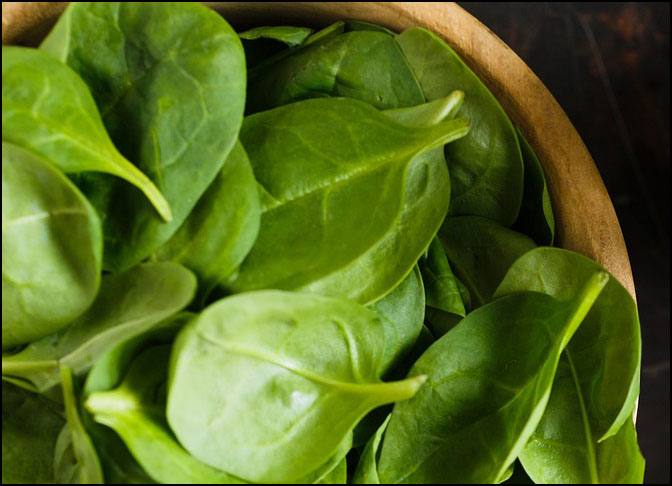
Used as a vegetable, Spinach is the leafy green, flowering plant, Spinacia oleracea.
HEALTH BENEFITS
I took an interest in Spinach because of its anti-inflammatory and antioxidant properties. These properties come from the bioactive compounds contained in the Spinach, specifically the nutrient Vitamin K, carotenoids Beta Carotene, Lutein, and Zeaxanthin, and polyphenol Thykamine.
HOW I USE SPINACH
As a woman with Multiple Sclerosis (MS),I use Spinach to help manage my MS. When I discovered that inflammation can cause MS relapses, with relapses being the worsening of current or creation of new MS symptoms, I incorporated Spinach into my beneficial diet to do the following:
- Use It’s anti-inflammatory properties to help manage inflammation.
- Use It’s antioxidant properties to protect the cells of the body from oxidative stress, which is linked to disease, a major source of inflammation.
So, Spinach helps manage inflammation and a major source of inflammation.
And managing inflammation helps manage my MS.
PREFERENCES
I prefer to use Spinach powder and frozen prepared (ie. cleaned and cut) Spinach, rather than deal with fresh Spinach. Since I have arms and hands weakened by my MS, dry and frozen prepared ingredients are easier to work with, making them helpful cooking shortcuts. Dry and frozen ingredients are also unlikely to expire before you can use them.
RECIPES
I use Spinach in the following recipes:
Feel free to check out my other recipes.
HAS SPINACH HELPED ME?
Yes. I believe Spinach have contributed to the anti-inflammatory nature of my beneficial diet.
I have not witnessed or identified any other benefits, but i look forward to seeing what the future brings.
CAUTION
Due to the ever possible occurrence of product contamination, I always double check my sources and check ingredient lists before trying a new item.
Allergic reactions can happen to anyone, so I do my research and keep my eyes open to any potentially dangerous reactions, especially drug interactions, when I try anything new. Spinach is high in Vitamin K, which can affect the blood thinner Warfarin.
Ingesting large amounts of anything can be harmful, so I always consume in moderation.
-Jen, aka. Power Chair Dorothy
REFERENCES
Beaupré, V., Boucher, N., & Desgagné-Penix, I. (2020). Thykamine Extracts from Spinach Reduce Acute Inflammation In Vivo and Downregulate Phlogogenic Functions of Human Blood Neutrophils In Vitro. Biomedicines, 8(7), 219.
Bhatt, T., & Patel, K. (2020). Carotenoids: Potent to Prevent Diseases Review. Natural products and bioprospecting, 10(3), 109–117.
Nemzer, B., Al-Taher, F., & Abshiru, N. (2021). Extraction and Natural Bioactive Molecules Characterization in Spinach, Kale and Purslane: A Comparative Study. Molecules (Basel, Switzerland), 26(9), 2515.
Popa, D.-S., Bigman, G., & Rusu, M. E. (2021). The Role of Vitamin K in Humans: Implication in Aging and Age-Associated Diseases. Antioxidants, 10(4), 566.
Encyclopedia Britannica: Spinach
WebMD: Spinach – Uses, Side Effects, and More
Not in Kansas Anymore (www.notinksanymore.com) is a site/blog authored and managed by Jen, aka. Power Chair Dorothy (pwrchr-dorothy). This site/blog is intended to provide educational and research information, and to share the author’s experiences.
The author of this site/blog is not a medical physician and this site/blog does not provide medical advice. This site/blog contains information that should not be used in place of a visit, call, consultation or the advice of your physician or other qualified healthcare provider. If you choose to apply or implement any information posted at this site/blog, you do so at your own risk.
 Not in Kansas Anymore