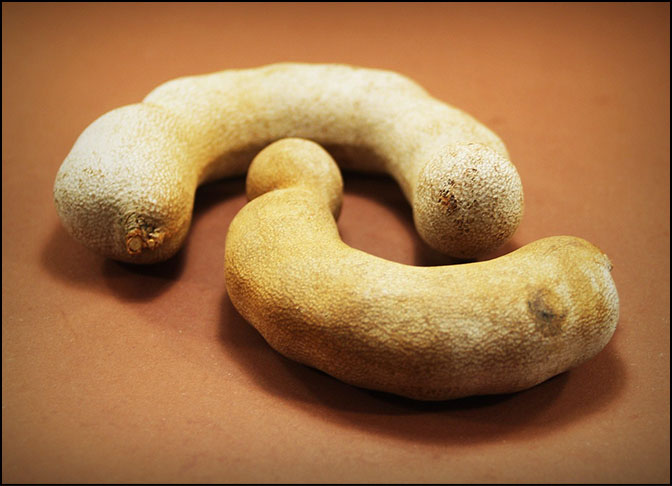
Tamarind is the pulp found in the pod-like fruits of the tree, Tamarindus indica.
HEALTH BENEFITS
I took an interest in Tamarind because of its anti-inflammatory and antioxidant properties. These properties come from the bioactive compounds contained in the Tamarind, specifically the polyphenols, Apigenin, Catechin, Luteolin, Tannins, and Proanthocyanidins.
HOW I USE TAMARIND
As a woman with Multiple Sclerosis (MS),I use Tamarind to help manage my MS. When I discovered that inflammation can cause MS relapses, with relapses being the worsening of current or creation of new MS symptoms, I incorporated Tamarind into my beneficial diet to do the following:
- Use its anti-inflammatory properties to help manage inflammation.
- Use its antioxidant properties to protect the cells of the body from oxidative stress, which is linked to disease, a major source of inflammation.
So, Tamarind helps manage inflammation and a major source of inflammation.
And managing inflammation, helps manage my MS.
PREFERENCES
I prefer to use Tamarind Powder, rather than Tamarind Pulp. Since I have arms and hands weakened by my MS, dry ingredients are easier to work with, making them helpful cooking shortcuts.
RECIPES
I use Tamarind in the following recipes:
Feel free to check out my other recipes.
HAS TAMARIND HELPED ME?
Yes. I believe Tamarind has contributed to the anti-inflammatory nature of my beneficial diet.
I have not witnessed or identified any other benefits, but i look forward to seeing what the future brings.
CAUTION
Due to the ever possible occurrence of product contamination, I always double check my sources and check ingredient lists before trying a new item.
Allergic reactions can happen to anyone, so I do my research and keep my eyes open to any potentially dangerous reactions, especially drug interactions, when I try anything new.
Ingesting large amounts of anything can be harmful, so I always consume in moderation.
-Jen, aka. Power Chair Dorothy
REFERENCES
Allemailem, K. S., Almatroudi, A., Alharbi, H. O. A., AlSuhaymi, N., Alsugoor, M. H., Aldakheel, F. M., Khan, A. A., & Rahmani, A. H. (2024). Apigenin: A Bioflavonoid with a Promising Role in Disease Prevention and Treatment. Biomedicines, 12(6), 1353.
Caporali, S., De Stefano, A., Calabrese, C., Giovannelli, A., Pieri, M., Savini, I., Tesauro, M., Bernardini, S., Minieri, M., & Terrinoni, A. (2022). Anti-Inflammatory and Active Biological Properties of the Plant-Derived Bioactive Compounds Luteolin and Luteolin 7-Glucoside. Nutrients, 14(6), 1155.
Fagbemi, K. O., Aina, D. A., Adeoye-Isijola, M. O., Naidoo, K. K., Coopoosamy, R. M., & Olajuyigbe, O. O. (2022). Bioactive compounds, antibacterial and antioxidant activities of methanol extract of Tamarindus indica Linn. Scientific reports, 12(1), 9432.
Jing, W., Xiaolan, C., Yu, C., Feng, Q., & Haifeng, Y. ((2022). Pharmacological effects and mechanisms of tannic acid. Biomedicine & Pharmacotherapy,154, 113561.
Kim, J. M., & Heo, H. J. (2022). The roles of catechins in regulation of systemic inflammation. Food science and biotechnology, 31(8), 957–970.
Komakech, R., Kim, Y. G., Matsabisa, G. M., & Kang, Y. (2019). Anti-inflammatory and analgesic potential of Tamarindus indica Linn. (Fabaceae): a narrative review. Integrative medicine research, 8(3), 181–186.
Rauf, A., Imran, M., Abu-Izneid, T., Haq, I. U., Patel, S., Pan, X., Naz, S., Silva, A. S., Saeed, F., & Suleria, H. A. R. (2019). Proanthocyanidins: A comprehensive review. Biomedicine & Pharmacotherapy, 116, 108999.
Encyclopedia Britannica: Tamarind
Not in Kansas Anymore (www.notinksanymore.com) is a site/blog authored and managed by Jen, aka. Power Chair Dorothy (pwrchr-dorothy). This site/blog is intended to provide educational and research information, and to share the author’s experiences.
The author of this site/blog is not a medical physician and this site/blog does not provide medical advice. This site/blog contains information that should not be used in place of a visit, call, consultation or the advice of your physician or other qualified healthcare provider. If you choose to apply or implement any information posted at this site/blog, you do so at your own risk.
 Not in Kansas Anymore