The World Health Organization defines probiotics as “live microorganisms which, when administered in adequate amounts, confer a health benefit on the host”.
And it all happens in our gastrointestinal tracts, also known as the ‘gut’.
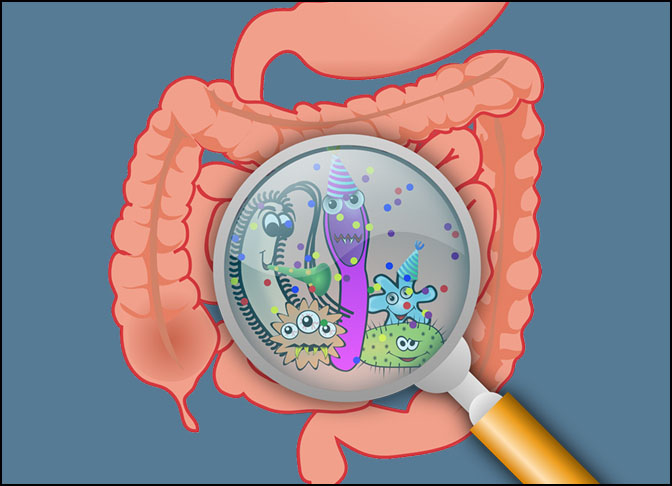
The interface between us and the outside world, the gut contains over 100 trillion microbes, also known as the ‘gut microbiota’.
Within the gut microbiota resides more than 500 different species of bacteria, yeast, and viruses.
The population begins to establish itself in our gut after birth and its composition is determined by the types of microbes we are further exposed to in life.
GUT HEALTH AND THE IMMUNE SYSTEM
Our immune systems co-evolved with the gut microbiota and a symbiotic relationship between the two was created. The gut microbiota taught our immune systems how to identify good microbes from bad microbes, and in turn the immune system protects the gut microbiota from the bad microbes. Therefore, a healthy population of good microbes within the gut microbiota promotes a healthy and strong immune system, and vice versa.
But not everyone is exposed to the best or strongest microbes over the course of their lifetimes or they may have a genetic condition which adversely affects the gut microbiota. Those people will have a weaker, less healthy, gut microbiota, which will lead to an unhealthy and weak immune system, which will then lead to extremely poor health. And that’s the last thing we need, especially with viruses, like the flu and Covid, actively evolving and mutating.
Now, probiotics are beneficial microbes that when ingested in adequate amounts successfully populate the gut, and in doing so help strengthen and improve the microbial population within the gut microbiota. Besides improving our immune systems and gut health, probiotics and the special compounds they create, also have anti-inflammatory, antioxidant, anti-bacterial, anti-viral, and anti-fungal properties.
WHERE DO PROBIOTICS COME FROM?
Besides being found in the gut, these beneficial microbes also exist in nature on the surfaces of fruits and vegetables. They are also the key components needed for lacto-fermentation, a traditional form of food preservation. Fermented foods include things like yogurt, sauerkraut, and pickles. When people who ate fermented foods noticed their health improving, it prompted research into why, and through that research probiotics were discovered.
Of course, not all fermented foods are created equal. Some contain stronger assortments of beneficial microbes, which contribute greater health benefits. Most commercially-produced fermented foods are also preserved using pasteurization, which kills the live probiotics, meaning no populating of the gut and less health benefits. Luckily, there are more and more fermented products being preserved nowadays using methods that protect the live cultures.
Foods can also be fermented at home, which saves money and allows for some creativity, but the process takes time and patience. Living microbes also tend to be sensitive to temperature and other conditions, making them fickle fermenters. A last option is to skip the fermented foods altogether and simply ingest the probiotics in supplement form. Unfortunately, supplements only temporarily populate the gut, bestowing some benefits, but not a lot.
Finding the right probiotic solution can be a process.
HOW I USE PROBIOTICS
As a woman with Multiple Sclerosis (MS),I use Probiotics to help manage my MS. When I discovered that inflammation causes MS relapses, with relapses being the worsening of current or creation of new MS symptoms, I incorporated Probiotics into my beneficial diet to do the following:
- Use their anti-inflammatory properties to help manage inflammation.
- Use their antioxidant properties to protect the cells of the body from oxidative stress, which is linked to disease, a major source of inflammation.
- Use their immune-boosting properties to help the body fight disease and infection.
So, Probiotics help manage inflammation and major sources of inflammation.
And managing inflammation, which helps manage my MS.
PREFERENCES
The following are the fermented items that I current rely upon for my probiotic needs:
I also take a probiotic supplement daily for addition support.
HAVE PROBIOTICS HELPED ME?
Yes. I believe Probiotics have contributed to the anti-inflammatory nature of my beneficial diet and helped improve the functioning of my immune system and gut.
I have not witnessed or identified any other benefits, but i look forward to seeing what the future brings.
CAUTION
Due to the ever possible occurrence of product contamination, I always double check my sources and check ingredient lists before trying a new item.
Allergic reactions can happen to anyone, so I do my research and keep my eyes open to any potentially dangerous reactions when I try anything new.
Ingesting large amounts of anything can be harmful, so I always consume in moderation.
-Jen, aka. Power Chair Dorothy
REFERENCES
Azad, M., Sarker, M., Li, T., & Yin, J. (2018). Probiotic Species in the Modulation of Gut Microbiota: An Overview. BioMed research international, 2018, 9478630. doi: 10.1155/2018/9478630.
Cristofori, F., Dargenio, V. N., Dargenio, C., Miniello, V. L., Barone, M., & Francavilla, R. (2021). Anti-Inflammatory and Immunomodulatory Effects of Probiotics in Gut Inflammation: A Door to the Body. Frontiers in immunology, 12, 578386.
Dolan, K. E., Finley, H. J., Burns, C. M., Gasta, M. G., Gossard, C. M., Parker, E. C., Pizano, J. M., Williamson, C. B., & Lipski, E. A. (2016). Probiotics and Disease: A Comprehensive Summary-Part 1, Mental and Neurological Health. Integrative Medicine (Encinitas), 15(5):46-58.
Dolan, K. E., Pizano, J. M., Gossard, C. M., Williamson, C. B., Burns, C. M., Gasta, M. G., Finley, H. J., Parker, E. C., & Lipski, E. A. (2017). Probiotics and Disease: A Comprehensive Summary—Part 6, Skin Health. Integrative Medicine (Encinitas), 16(4):32-41.
FAO & WHO (2006). Probiotics in Food. Health and Nutritional Properties and Guidelines for Evaluation. FAO Food and Nutrition Paper no. 85. Rome: FAO.
Fijan S. (2023). Probiotics and Their Antimicrobial Effect. Microorganisms, 11(2), 528.
Finley, H. J., Gasta, M. G., Dolan, K. E., Pizano, J. M., Gossard, C. M., Williamson, C. B., Burns, C. M., Parker, E. C., & Lipski, E. A. (2018). Probiotics and Disease: A Comprehensive Summary—Part 8, Gastrointestinal and Genitourinary Disorders. Integrative Medicine (Encinitas), 17(1):38-48.
Gasta, M. G., Gossard, C. M., Williamson, C. B., Dolan, K. E., Finley, H. J., Burns, C. M., Parker, E. C., Pizano, J. M., & Lipski, E. A. (2017). Probiotics and Disease: A Comprehensive Summary—Part 5, Respiratory Conditions of the Ears, Nose, and Throat Integrative Medicine (Encinitas), 16(3):28-40.
Gasta, M. G., Williamson, C. B., Gossard, C. M., Pizano, J. M., Burns, C. M., Dolan, K. E., Finley, H. J., Parker, E. C., & Lipski, E. A. (2017). Probiotics and Disease: A Comprehensive Summary—Part 4, Infectious Diseases. Integrative Medicine (Encinitas), 16(2):28-38.
Gensollen, T., Iyer, S. S., Kasper, D. L., & Blumberg, R. S. (2016). How Colonization by Microbiota in Early Life Shapes the Immune System. Science, 352, 539–544. doi :10.1126/science.aad9378.
Gossard, C. M., Pizano, J. M., Burns, C. M., Williamson, C. B., Dolan, K. E., Finley, H. J., Gasta, M. G., Parker, E. C., & Lipski, E. A. (2018). Probiotics and Disease: A Comprehensive Summary—Part 9, Cancer. Integrative Medicine (Encinitas), 17(2):34-46.
Han, S., Lu, Y., Xie, J., Fei, Y., Zheng, G., Wang, Z., Liu, J., Lv, L., Ling, Z., Berglund, B., Yao, M., & Li, L. (2021). Probiotic Gastrointestinal Transit and Colonization After Oral Administration: A Long Journey. Frontiers in cellular and infection microbiology, 11, 609722.
Nicholson, J., Holmes, E., Kinross, J., Burcelin, R., Gibson, G., Jia, W., & Pettersson, S. (2012). Host-Gut Microbiota Metabolic Interactions. Science, 336, 1262-1267. doi: 10.1126/science.1223813.
Rossoni, R. D., de Barros, P. P., de Alvarenga, J. A., Ribeiro, F. C., Velloso, M. D. S., Fuchs, B. B., Mylonakis, E., Antonio Olavo Cardoso Jorge, A. O. C., & Junqueira, J. C. (2018). Antifungal Activity of Clinical Lactobacillus Strains against Candida albicans Biofilms: Identification of Potential Probiotic Candidates to prevent Oral Candidiasis. Biofouling, 34(2):212-225. doi: 10.1080/08927014.2018.1425402.
Tamang, J. P., Shin, D-H., Jung, S-J., & Chae, S-W. (2016). Functional Properties of Microorganisms in Fermented Foods. Frontiers of Microbiology, 7, 578. doi: 10.3389/fmicb.2016.00578.
Thursday, E. & Juge, N. (2017). Introduction to the Human Gut Microbiota. Biochemical Journal, 474, 1823-1836. doi: 10.1042/BCJ20160510.
Williamson, C. B., Burns, C. M., Gossard, C. M., Pizano, J. M., Dolan, K. E., Finley, H. J., Gasta, M. G., Parker, E. C., & Lipski, E. A. (2017). Probiotics and Disease: A Comprehensive Summary—Part 3, Cardiometabolic Disease and Fatigue Syndromes. Integrative Medicine (Encinitas), 16(1):30-4.
Wang, Y., Moon, A., Huang, J., Sun, Y., & Qiu, H. J. (2022). Antiviral Effects and Underlying Mechanisms of Probiotics as Promising Antivirals. Frontiers in cellular and infection microbiology, 12, 928050.
Wang, Y., Wu, Y., Wang, Y., Xu, H., Mei, X., Yu, D., Wang, Y., & Li, W. (2017). Antioxidant Properties of Probiotic Bacteria. Nutrients, 9(5), 521.
Not in Kansas Anymore (www.notinksanymore.com) is a site/blog authored and managed by Jen, aka. Power Chair Dorothy (pwrchr-dorothy). This site/blog is intended to provide educational and research information, and to share the author’s experiences.
The author of this site/blog is not a medical physician and this site/blog does not provide medical advice. This site/blog contains information that should not be used in place of a visit, call, consultation or the advice of your physician or other qualified healthcare provider. If you choose to apply or implement any information posted at this site/blog, you do so at your own risk.
 Not in Kansas Anymore