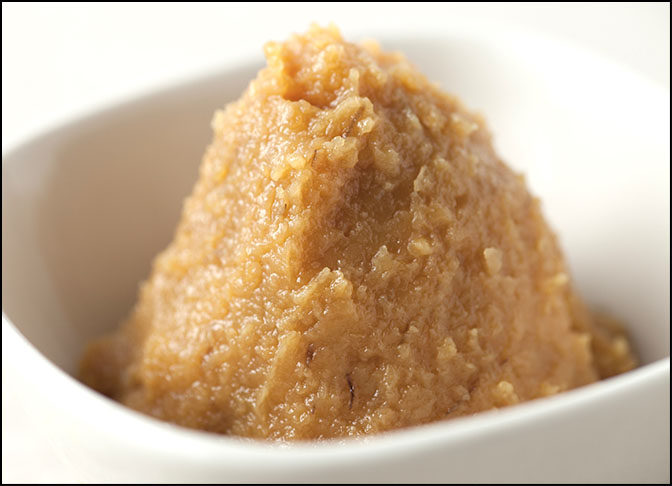
Miso is a thick paste made from fermented soybeans. The soybeans are fermented using beneficial microbes.
HEALTH BENEFITS
I took an interest in Miso because of its anti-inflammatory and antioxidant properties, as well as its ability to support gut health and the immune system. These properties come from the bioactive compounds in the Miso. The most powerful being the polyphenols, Daidzein and Genistein, and the beneficial microbes (ie. Probiotics).
To receive the maximum benefits from Probiotics, live active cultures are required. Luckily, Miso contains live active cultures.
HOW I USE MISO
As a woman with Multiple Sclerosis (MS),I use Miso to help manage my MS. When I discovered that inflammation can cause MS relapses, with relapses being the worsening of current or creation of new MS symptoms, I incorporated Miso into my beneficial diet to do the following:
- Use It’s anti-inflammatory properties to help manage inflammation.
- Use It’s antioxidant properties to protect the cells of the body from oxidative stress, which is linked to disease, a major source of inflammation.
- Use It’s ability to support gut health and the immune system to help the body fight disease.
So, Miso helps manage inflammation and major sources of inflammation.
And managing inflammation, helps manage my MS.
PREFERENCES
There are many varieties of Miso:, the most common being White Miso and Red Miso. The big differences between them are the secondary ingredients added and the duration of fermentation. The longer the fermentation, the darker the color and the stronger the flavor. I prefer White Miso because of it’s light flavor.
RECIPES
I add Miso to my single serving soups.
Feel free to check out my other recipes.
HAS MISO HELPED ME?
Yes. I believe Miso has contributed to the anti-inflammatory nature of my beneficial diet. I also believe its helped support my gut health and immune system as a extra special food and natural remedy.
I have not witnessed or identified any other benefits, but i look forward to seeing what the future brings.
CAUTION
Overheating Miso can kill the live cultures, so I carefully mix it into hot items to protect the microbes.
Due to the ever possible occurrence of product contamination, I always double check my sources and check ingredient lists before trying a new item. I also make sure the product contains live, active cultures.
Allergic reactions can happen to anyone, so I do my research and keep my eyes open to any potentially dangerous reactions, especially drug interactions, when I try anything new.
Ingesting large amounts of anything can be harmful, like Miso which contains a lot of salt, so I always consume in moderation.
-Jen, aka. Power Chair Dorothy
REFERENCES
Allwood, J. G., Wakeling, L. T., & Bean, D. C. (2021). Fermentation and the microbial community of Japanese koji and miso: A review. Journal of Food Science, 86(6), 2194-2207.
Cristofori, F., Dargenio, V. N., Dargenio, C., Miniello, V. L., Barone, M., & Francavilla, R. (2021). Anti-Inflammatory and Immunomodulatory Effects of Probiotics in Gut Inflammation: A Door to the Body. Frontiers in immunology, 12, 578386
Jayachandran, M., & Xu, B. (2019). An insight into the health benefits of fermented soy products. Food chemistry, 271, 362–371.
Kotake, K., Kumazawa, T., Nakamura, K., Shimizu, Y., Ayabe, T., & Adachi, T. (2022). Ingestion of miso regulates immunological robustness in mice. PloS one, 17(1), e0261680.
Mijiti, N., Someya, A., & Nagaoka, I. (2021). Effects of isoflavone derivatives on the production of inflammatory cytokines by synovial cells. Experimental and therapeutic medicine, 22(5), 1300.
Pejčić, T., Zeković, M., Bumbaširević, U., Kalaba, M., Vovk, I., Bensa, M., Popović, L., & Tešić, Ž. (2023). The Role of Isoflavones in the Prevention of Breast Cancer and Prostate Cancer. Antioxidants, 12(2), 368.
Saeed, F., Afzaal, M., Shah, Y. A., Khan, M. H., Hussain, M., Ikram, A., Ateeq, H., Noman, M., Saewan, S. A., & Khashroum, A. O. (2022). Miso: A traditional nutritious & health-endorsing fermented product. Food science & nutrition, 10(12), 4103–4111.
Tamang, J. P., Shin, D-H., Jung, S-J., & Chae, S-W. (2016). Functional Properties of Microorganisms in Fermented Foods. Frontiers of Microbiology, 7, 578. doi: 10.3389/fmicb.2016.00578.
Not in Kansas Anymore (www.notinksanymore.com) is a site/blog authored and managed by Jen, aka. Power Chair Dorothy (pwrchr-dorothy). This site/blog is intended to provide educational and research information, and to share the author’s experiences.
The author of this site/blog is not a medical physician and this site/blog does not provide medical advice. This site/blog contains information that should not be used in place of a visit, call, consultation or the advice of your physician or other qualified healthcare provider. If you choose to apply or implement any information posted at this site/blog, you do so at your own risk.
 Not in Kansas Anymore