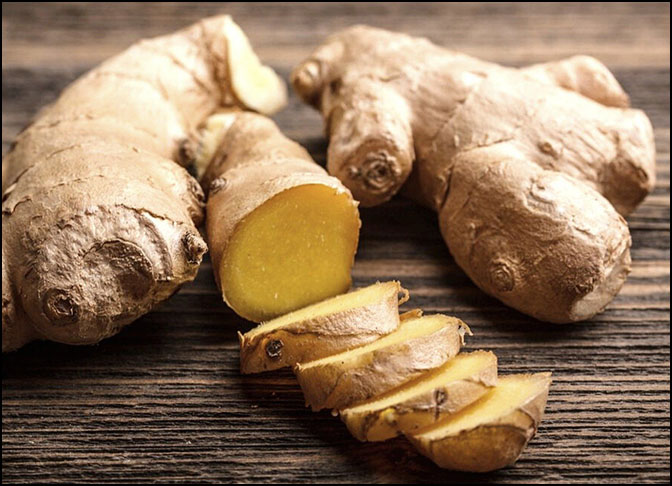
A pungent spice, Ginger comes from the roots of the plant, Zingiber officinale.
HEALTH BENEFITS
I took an interest in Ginger because of their anti-inflammatory and antioxidant properties. These properties come from the bioactive compounds contained in the Ginger. The most powerful being the polyphenols, gingerols and shogaols.
HOW I USE GINGER
As a woman with Multiple Sclerosis (MS),I use Ginger to help manage my MS. When I discovered that inflammation can cause MS relapses, with relapses being the worsening of current or creation of new MS symptoms, I incorporated Ginger into my beneficial diet to do the following:
- Use It’s anti-inflammatory properties to help manage inflammation.
- Use It’s antioxidant properties to protect the cells of the body from oxidative stress, which is linked to disease, a major source of inflammation.
So, Ginger helps manage inflammation and a major source of inflammation.
And managing inflammation, helps manage my MS.
PREFERENCES
I prefer to use fresh prepared (ie. minced) Ginger, rather than deal with fresh whole Ginger. Since I have arms and hands weakened by my MS, fresh prepared ingredients are easier to work with, making them helpful cooking shortcuts.
RECIPES
I use Ginger in the following recipes:
- VINAIGRETTES
Feel free to check out my other recipes.
HAS GINGER HELPED ME?
Yes. I believe that Ginger has contributed to the anti-inflammatory nature of my beneficial diet. It’s anti-inflammatory properties have also been strong enough to help counter the more intense MS flares I have experienced, to help stop MS relapses from occurring.
I have not witnessed or identified any other benefits, but i look forward to seeing what the future brings.
CAUTION
Due to the ever possible occurrence of product contamination, I always double check my sources and check ingredient lists before trying a new item.
Allergic reactions can happen to anyone, so I do my research and keep my eyes open to any potentially dangerous reactions, especially drug interactions, when I try anything new. Ginger can potentially affect blood-thinning, blood pressure, diabetic, and other types of medication.
Ingesting large amounts of anything can also be harmful, especially Ginger that can cause gastric distress, heartburn and diarrhea, so I always consume in moderation.
-Jen, aka. Power Chair Dorothy
REFERENCES
Ballester, P., Cerdá, B., Arcusa, R., Marhuenda, J., Yamedjeu, K., & Zafrilla, P. (2022). Effect of Ginger on Inflammatory Diseases. Molecules (Basel, Switzerland), 27(21), 7223.
Mao, Q. Q., Xu, X. Y., Cao, S. Y., Gan, R. Y., Corke, H., Beta, T., & Li, H. B. (2019). Bioactive Compounds and Bioactivities of Ginger (Zingiber officinale Roscoe). Foods (Basel, Switzerland), 8(6), 185.
Kitti , P., Gábor, S. A., & Tünde, F. (2024). The “root” causes behind the anti-inflammatory actions of ginger compounds in immune cells. Frontiers in Immunology, 15
Encyclopedia Britannica: Ginger
WebMD: Ginger – Uses, Side Effects, and More
Not in Kansas Anymore (www.notinksanymore.com) is a site/blog authored and managed by Jen, aka. Power Chair Dorothy (pwrchr-dorothy). This site/blog is intended to provide educational and research information, and to share the author’s experiences.
The author of this site/blog is not a medical physician and this site/blog does not provide medical advice. This site/blog contains information that should not be used in place of a visit, call, consultation or the advice of your physician or other qualified healthcare provider. If you choose to apply or implement any information posted at this site/blog, you do so at your own risk.
 Not in Kansas Anymore