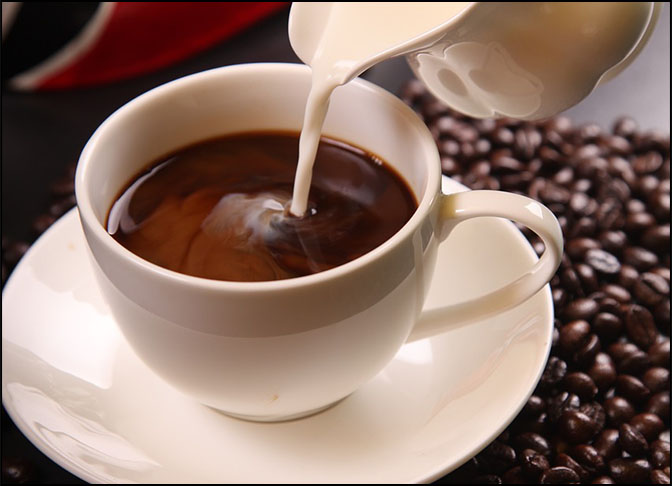
Coffee is a drink brewed from the ground, roasted beans of the plant genus, Coffea.
HEALTH BENEFITS
I took an interest in Coffee because of its anti-inflammatory and antioxidant properties. These properties come from the bioactive compounds in the Coffee, specifically the natural stimulant Caffeine, and polyphenols, Caffeic Acid and Chlorogenic Acid.
HOW I USE COFFEE
As a woman with Multiple Sclerosis (MS), I use Coffee to help manage my MS. When I discovered that inflammation can cause MS relapses, with relapses being the worsening of current or creation of new MS symptoms, I incorporated Coffee into my beneficial diet to do the following:
- Use It’s anti-inflammatory properties to help manage inflammation.
- Use It’s antioxidant properties to protect the cells of the body from oxidative stress, which is linked to disease, a major source of inflammation.
So, Coffee helps manage inflammation and a major source of inflammation.
And managing inflammation, helps manage my MS.
RECIPES
I use Coffee in my ARMOR-PLATED COFFEE.
Feel free to check out my other recipes.
HAS COFFEE HELPED ME?
Yes. I believe Coffee has contributed to the anti-inflammatory nature of my beneficial diet.
I have not witnessed or identified any other benefits, but i look forward to seeing what the future brings.
CAUTION
Due to the ever possible occurrence of product contamination, I always double check my sources and check ingredient lists before trying a new item.
Allergic reactions can happen to anyone, so I do my research and keep my eyes open to any potentially dangerous reactions, especially drug interactions, when I try anything new.
Ingesting large amounts of anything can be harmful, so I always consume in moderation. Caffeine ingested in excess can cause issues, such as restlessness, anxiety, insomnia, rapid heart rate and high blood pressure.
-Jen, aka. Power Chair Dorothy
REFERENCES
Andrade, C., Perestrelo, R., & Câmara, J. S. (2022). Bioactive Compounds and Antioxidant Activity from Spent Coffee Grounds as a Powerful Approach for Its Valorization. Molecules, 27(21), 7504.
Gökcen, B. B., & Şanlier, N. (2019). Coffee consumption and disease correlations. Critical reviews in food science and nutrition, 59(2), 336–348.
Huang, J., Xie, M., He, L., Song, X., & Cao, T. (2023). Chlorogenic acid: a review on its mechanisms of anti-inflammation, disease treatment, and related delivery systems. Frontiers in pharmacology, 14, 1218015.
Makiso, M. U., Tola, Y. B., Ogah, O., & Endale, F. L. (2023). Bioactive compounds in coffee and their role in lowering the risk of major public health consequences: A review. Food science & nutrition, 12(2), 734–764.
Pavlíková N. (2022). Caffeic Acid and Diseases-Mechanisms of Action. International journal of molecular sciences, 24(1), 588.
Rai, S. P., Ansari, A. H., Singh, D., & Singh, S. (2024). Coffee, antioxidants, and brain inflammation. Progress in brain research, 289, 123–150.
Temple, J. L., Bernard, C., Lipshultz, S. E., Czachor, J. D., Westphal, J. A., & Mestre, M. A. (2017). The Safety of Ingested Caffeine: A Comprehensive Review. Frontiers in psychiatry, 8, 80.
Encyclopedia Britannica: Coffee
Not in Kansas Anymore (www.notinksanymore.com) is a site/blog authored and managed by Jen, aka. Power Chair Dorothy (pwrchr-dorothy). This site/blog is intended to provide educational and research information, and to share the author’s experiences.
The author of this site/blog is not a medical physician and this site/blog does not provide medical advice. This site/blog contains information that should not be used in place of a visit, call, consultation or the advice of your physician or other qualified healthcare provider. If you choose to apply or implement any information posted at this site/blog, you do so at your own risk.
 Not in Kansas Anymore