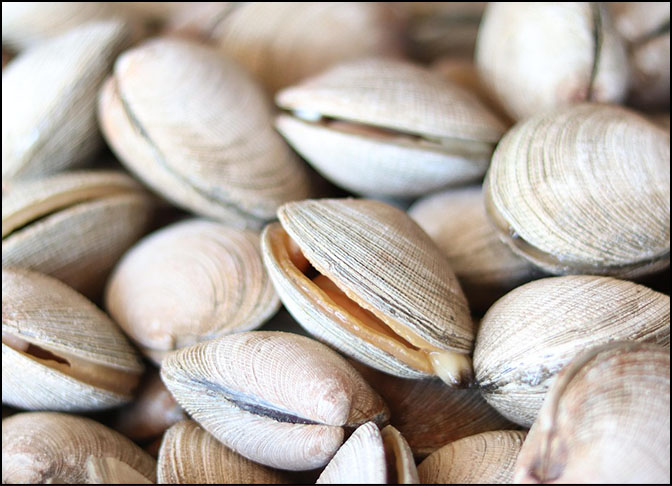
Clams are aquatic molluscs from the class, Bivalvia, meaning they live within a hinged shell.
HEALTH BENEFITS
I took an interest in Clams because of their anti-inflammatory and antioxidant properties. These properties come from the bioactive compounds contained in the Clams, specifically the omega-3 fatty acids, EPA and DHA, and an assortment of essential amino acids.
HOW I USE CLAMS
As a woman with Multiple Sclerosis (MS),I use Clams to help manage my MS. When I discovered that inflammation causes MS relapses, with relapses being the worsening of current or creation of new MS symptoms, I incorporated Clams into my beneficial diet to do the following:
- Use their anti-inflammatory properties to help manage inflammation.
- Use their antioxidant properties to protect the cells of the body from oxidative stress, which is linked to disease, a major source of inflammation.
So, Clams help manage inflammation and a major source of inflammation.
And managing inflammation, helps manage my MS.
PREFERENCES
I prefer to use canned prepared (ie. cleaned, shucked, and cut) Clams, rather than deal with fresh whole Clams. Since I have arms and hands weakened by my MS, canned prepared ingredients are easier to work with, making them helpful cooking shortcuts.
RECIPES
I add Clams to my CELERY POTATO SOUP.
Feel free to check out my other recipes.
HAVE CLAMS HELPED ME?
Yes. I believe that Clams have contributed to the anti-inflammatory nature of my beneficial diet.
I have not witnessed or identified any other benefits, but i look forward to seeing what the future brings.
CAUTION
Due to the ever possible occurrence of product contamination, I always double check my sources and check ingredient lists before trying a new item.
Allergic reactions can happen to anyone, so I do my research and keep my eyes open to any potentially dangerous reactions, especially drug interactions, when I try anything new.
Ingesting large amounts of anything can also be harmful, so I always consume in moderation.
-Jen, aka. Power Chair Dorothy
REFERENCES
Banaszak, M., Dobrzyńska, M., Kawka, A., Górna, I., Woźniak, D., Przysławski, J., Drzymała-Czyż, S. (2024). Role of Omega-3 fatty acids eicosapentaenoic (EPA) and docosahexaenoic (DHA) as modulatory and anti-inflammatory agents in noncommunicable diet-related diseases – Reports from the last 10 years. Clinical Nutrition ESPEN, 63, 240-258.
Egbujor, M. C., Olaniyan, O. T., Emeruwa, C. N., Saha, S., Saso, L., & Tucci, P. (2024). An insight into role of amino acids as antioxidants via NRF2 activation. Amino acids, 56(1), 23.
Tan, K., Xu, P., Huang, L., Luo, C., Choong, K., Li, Z., Guo, Y., & Cheong, K. (2025). Quantitative evaluation of essential amino acids and omega-3 long-chain polyunsaturated fatty acids from global marine bivalve aquaculture. Food Chemistry: X, 25, 102181.
Luo, X., Pan, R., Xu, L., Zheng, Y., & Zheng, B. (2025). Clam peptides: Preparation, flavor properties, health benefits, and safety risks. Food Research International, 207, 116113.
Not in Kansas Anymore (www.notinksanymore.com) is a site/blog authored and managed by Jen, aka. Power Chair Dorothy (pwrchr-dorothy). This site/blog is intended to provide educational and research information, and to share the author’s journey.
The author of this site/blog is not a medical physician and this site/blog does not provide medical advice. This site/blog contains information that should not be used in place of a visit, call, consultation or the advice of your physician or other qualified healthcare provider. If you choose to apply or implement any information posted at this site/blog, you do so at your own risk.
 Not in Kansas Anymore